Article Category and Author

Admin
Share
New Listings Today

Post-COVID Property: A Comprehensive Look at Real Estate Prices in Charlotte, Lake Norman, and Asheville
The real estate landscape across the United States has undergone a dramatic transformation since the onset of the COVID-19 pandemic. Few areas exemplify this evolution better than the distinct regions of Charlotte, Lake Norman, and Asheville in North Carolina. Driven by a complex interplay of low interest rates (at first), remote work freedom, a quest for space, and the persistent allure of a quality lifestyle, home prices in these key hubs have defied traditional trajectory, sparking intense interest and scrutiny from buyers, sellers, and investors alike.
But as the world tentatively settles into a new normal, and economic headwinds gather, the burning question remains: Where are prices headed next? To shed light on this complex puzzle, we turn to Brent Dillon, a leading real estate expert with a deep understanding of the North Carolina market. This article, a zizzyhouz.com exclusive, provides an in-depth analysis of price trends in Charlotte, Lake Norman, and Asheville post-COVID, leveraging Brent Dillon’s extensive experience and insights to deliver a data-driven report and a forward-looking projection of the market’s trajectory.
The Pre-COVID Baseline: A Market on the Rise
Before we delve into the post-pandemic frenzy, it’s crucial to establish the baseline. In early 2020, Charlotte was already experiencing significant growth. Fueled by a thriving banking sector, an influx of tech talent, and a relatively affordable cost of living compared to major coastal hubs, home prices were steadily increasing, albeit at a manageable pace.
Similarly, Lake Norman, with its proximity to Charlotte and distinct lakeside charm, was attracting retirees and affluent professionals. Prices here were higher than the city average but saw consistent growth. Asheville, too, was experiencing its own Renaissance, driven by a vibrant arts scene, outdoor enthusiasm, and a growing reputation as a desirable place to live and work, leading to a tightening market and rising prices, especially in sought-after neighborhoods.
The Impact of COVID-19: A Paradigm Shift
The pandemic acted as a powerful accelerant, dramatically altering the landscape. The sudden necessity for home offices and a desire for more private outdoor space, combined with record-low mortgage rates and a dramatic drop in available inventory (as sellers initially stayed put), created a perfect storm for unprecedented price growth across all three regions.
Charlotte: The Post-COVID Powerhouse
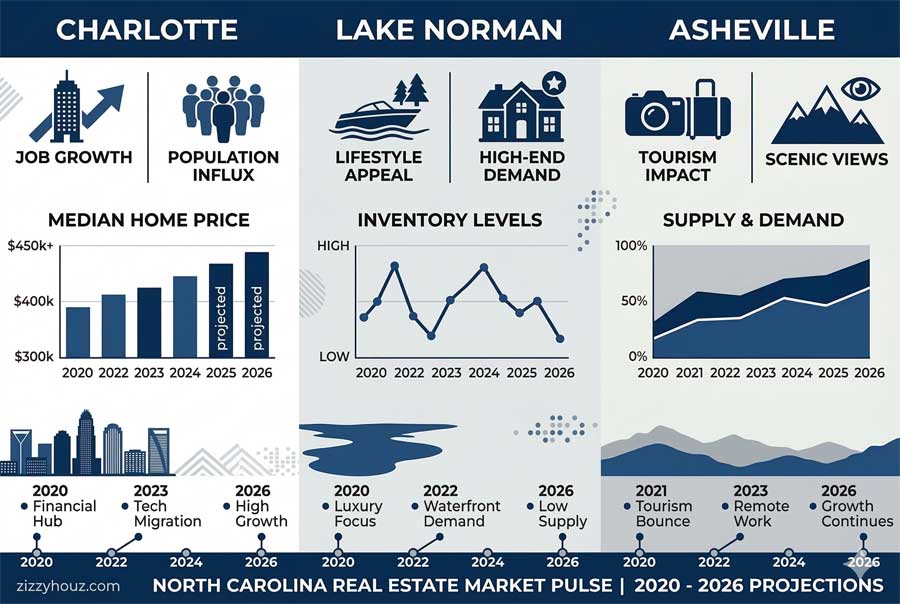
In the Queen City, the post-COVID market went into overdrive. Home prices skyrocketed as demand dramatically outpaced supply. Let’s look at the numbers.
The Price Surge (2020-2022)
According to data compiled by zizzyhouz.com and verified by Brent Dillon, the median home sale price in the Charlotte Metro Area witnessed staggering increases. “We saw unparalleled competition,” says Brent Dillon. “Offers significantly over asking price, multiple-offer scenarios on almost every listing, and homes selling in mere days became the norm.”
This wasn’t just in the luxury sector; starter homes and mid-range properties also saw substantial appreciation.
Factors Driving Charlotte’s Appreciation:
- Job Market Strength: Charlotte’s job market remained surprisingly resilient, particularly in sectors conducive to remote work, like finance and tech.
- Affordability Relative to Major Hubs: While prices surged, Charlotte remained significantly more affordable than cities like New York, San Francisco, or even Atlanta, making it a highly attractive relocation destination for those with newfound remote work flexibility.
- Low Inventory: This was perhaps the single biggest factor. Sellers were slow to put their homes on the market, creating extreme scarcity.
Current Status and Key Trends:
As 2023 and 2024 unfolded, the breakneck pace of price growth began to moderate, though not dramatically correct. The aggressive interest rate hikes by the Federal Reserve put a significant damper on affordability, cooling the hottest parts of the market. However, a significant correction has not occurred due to the persistent low inventory. “We’re seeing a shift from a ‘seller’s market on steroids’ to a more balanced market, leaning slightly toward sellers,” Brent Dillon observes. “The defining factor remains low inventory, which is propping up prices.”
Lake Norman: Lifestyle in High Demand
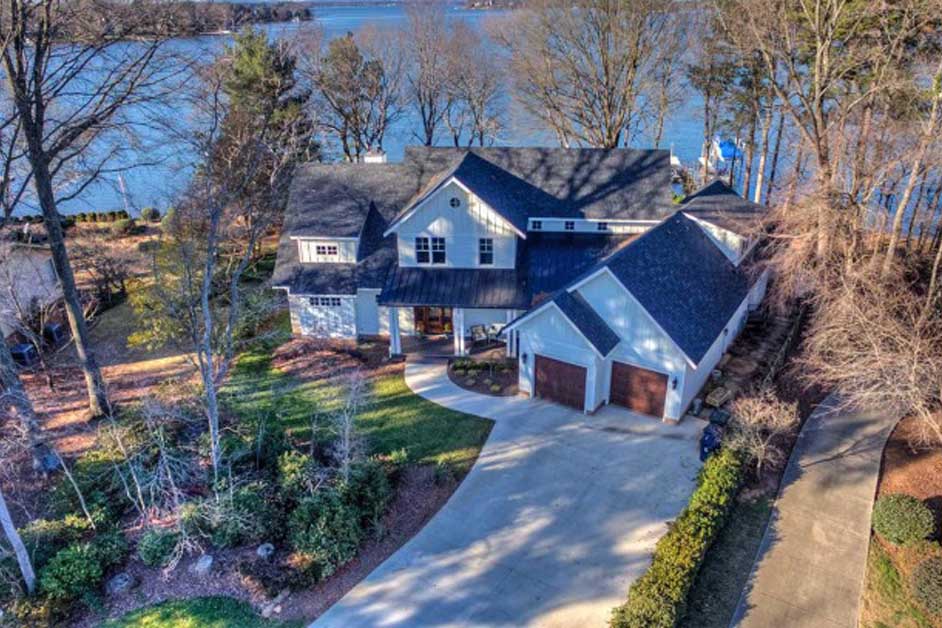
The Lake Norman area, including Mooresville, Davidson, and Cornelius, experienced an even more pronounced price surge. The “pandemic-driven search for space and lifestyle” was a defining feature of the real estate landscape, and Lake Norman offered this in abundance.
The Luxury Boom (2020-2022)
Prices in the Lake Norman area saw incredible growth, particularly for waterfront and luxury properties. “It wasn’t just the overall market; we saw a specific focus on high-end homes,” notes Brent Dillon. “People who were suddenly able to work from anywhere were willing to pay a premium for a lifestyle upgrade.”
This led to dramatic price increases, particularly for homes offering unique lake access and features.
Current Status and Trends:
Like Charlotte, Lake Norman is experiencing a softening of the extreme price growth seen in 2021-2022. Higher mortgage rates have impacted affordability for some buyers. However, the unique lifestyle draw of the lake means that desirable properties, particularly those that are well-priced and maintained, continue to attract significant interest. The overall market remains tight, supporting elevated price points.
Asheville: Mountain Serenity Comes at a Premium
Asheville’s market has always had a unique character, driven by its blend of arts, culture, and outdoor access. Post-COVID, these attributes became even more sought after, fueling substantial price appreciation.
The Price Ascent (2020-2022)
Median home prices in Asheville and the surrounding Buncombe County saw dramatic increases. “Asheville has always had a limited supply of homes, particularly in the most desirable areas,” Brent Dillon explains. “The pandemic just amplified that shortage.”
The influx of buyers seeking mountain views and a slower pace of life drove intense competition.
Factors Driving Asheville’s Market:
- Lifestyle Attraction: The desire for a mountain lifestyle has always been strong, and the pandemic magnified this appeal.
- Limited Supply: Asheville’s topography and stricter development regulations naturally limit the availability of new homes, particularly in high-demand areas.
Current Status and Trends:
Asheville, too, is seeing a leveling off of price growth. Higher mortgage rates have had an impact. The market, however, remains competitive, especially for unique properties or homes in the city’s character-rich neighborhoods. The limited inventory ensures that prices are unlikely to experience a major correction in the near term.
Market Comparison: A High-Level View
| Region | Primary Drivers Post-COVID | Impact of Interest Rates | Current Price Outlook |
| Charlotte | Diverse job market, relative affordability, low inventory. | Significant cooling, but persistent low inventory supports prices. | Moderation in price growth, low inventory remains key. A shift to a more balanced market. |
| Lake Norman | Unparalleled lifestyle (lake life), remote work flexibility, focus on luxury. | Higher-end market is slightly more sensitive to rate hikes. | Prices remain elevated, especially for desirable waterfront/luxury properties. Tight inventory persists. |
| Asheville | Limited land supply, mountain lifestyle, arts/culture, strong demand. | Impacts affordability, particularly for first-time buyers and those not using cash. | Slowed price appreciation, but the tight supply will keep prices elevated. Competitive market continues. |
The Road Ahead: Expert Projections from Brent Dillon
What does the future hold for home prices in Charlotte, Lake Norman, and Asheville? While predicting the market with absolute certainty is impossible, Brent Dillon provides a well-reasoned projection based on current data and extensive market experience.
1. Price Appreciation Will Likely Continue, But at a More Sustainable Pace:
“The double-digit, unsustainable growth we saw in 2021 and 2022 is over,” Brent Dillon confidently states. “However, expecting a dramatic price correction or crash is unlikely in these three specific markets, unless there’s a significant national economic downturn.”
Instead, he projects a return to more typical, albeit still positive, price appreciation in the range of 3-6% annually for the foreseeable future. “This is a healthier, more sustainable growth rate,” he adds.
2. The Impact of Interest Rates is a Key Variable:
The single biggest factor influencing the near-term future is the trajectory of interest rates. “If rates stay high for an extended period, it will continue to put pressure on affordability and cool demand,” says Dillon. “Conversely, if the Federal Reserve begins to lower rates in late 2024 or 2025, we could see another uptick in demand and potentially a slight acceleration in price growth.”
3. Inventory remains the X-Factor:
“The one constant in all three markets is the critically low inventory,” points out Dillon. “Until we see a significant influx of new listings—either from increased construction or from current homeowners deciding to sell—supply will remain a major bottleneck, supporting elevated prices.” He doesn’t anticipate this bottleneck easing significantly in the short term.
4. Location and Property Specifics Matter More Than Ever:
“The ‘all ships rise’ era is over,” emphasizes Brent Dillon. In the post-pandemic market, the specifics of the property are critical. Well-maintained homes in prime locations, with desirable features and competitive pricing, will continue to command strong attention and potentially multiple offers. Conversely, properties needing significant work or in less desirable locations may see slower sales and need to be priced carefully.
Regional Specifics:
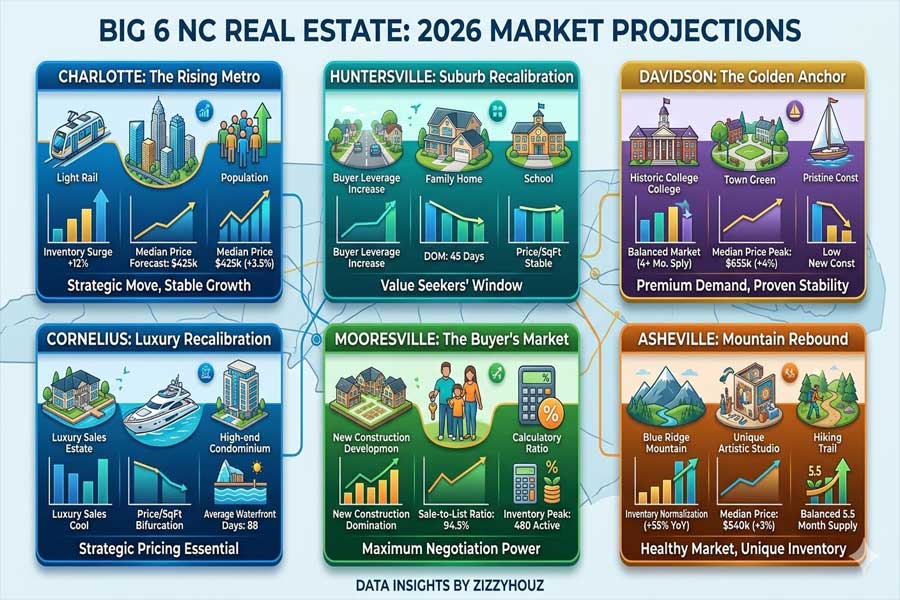
- Charlotte: Expect a bifurcation. Popular suburban neighborhoods with good schools and access to amenities will remain competitive. City-center properties may see a slower pace. The job market remains a crucial anchor.
- Lake Norman: Waterfront and premium properties with modern amenities will continue to hold their value well. Non-waterfront properties may see more price moderation.
- Asheville: Character-rich neighborhoods near downtown and properties with mountain views will remain highly desirable. Market activity in outlaying areas may cool slightly.
Conclusion: A Dynamic Market Requires Expert Guidance
The real estate markets in Charlotte, Lake Norman, and Asheville have navigated a historic period of price growth. While the days of breakneck, double-digit appreciation are likely over, the fundamental drivers—strong job markets (in Charlotte), desirable lifestyles (Lake Norman and Asheville), and critically low inventory—remain in place.
Predicting the future with absolute certainty is impossible. However, by understanding the interplay of key factors like interest rates, inventory levels, and location, you can make informed decisions.
“Navigating this evolving market requires a data-driven approach and a deep understanding of local nuances,” concludes Brent Dillon. “The ‘rules of engagement’ have shifted, and having an expert on your side is more important than ever, whether you’re looking to buy your dream home, sell your property for top dollar, or make a sound investment.”
For personalized insights and expert guidance on your next real estate journey in Charlotte, Lake Norman, or Asheville, visit zizzyhouz.com today and connect with Brent Dillon and his team.
Full Advanced Search
Editor's Pick
What Our Customers Say

“I went under contract on my home, one hour after he listed the property.”
"Brent Dillon is the reason that the process of selling of my home and buying a new home in Florida went flawlessly. Brent was there every step of the way, guiding me and making me [...]